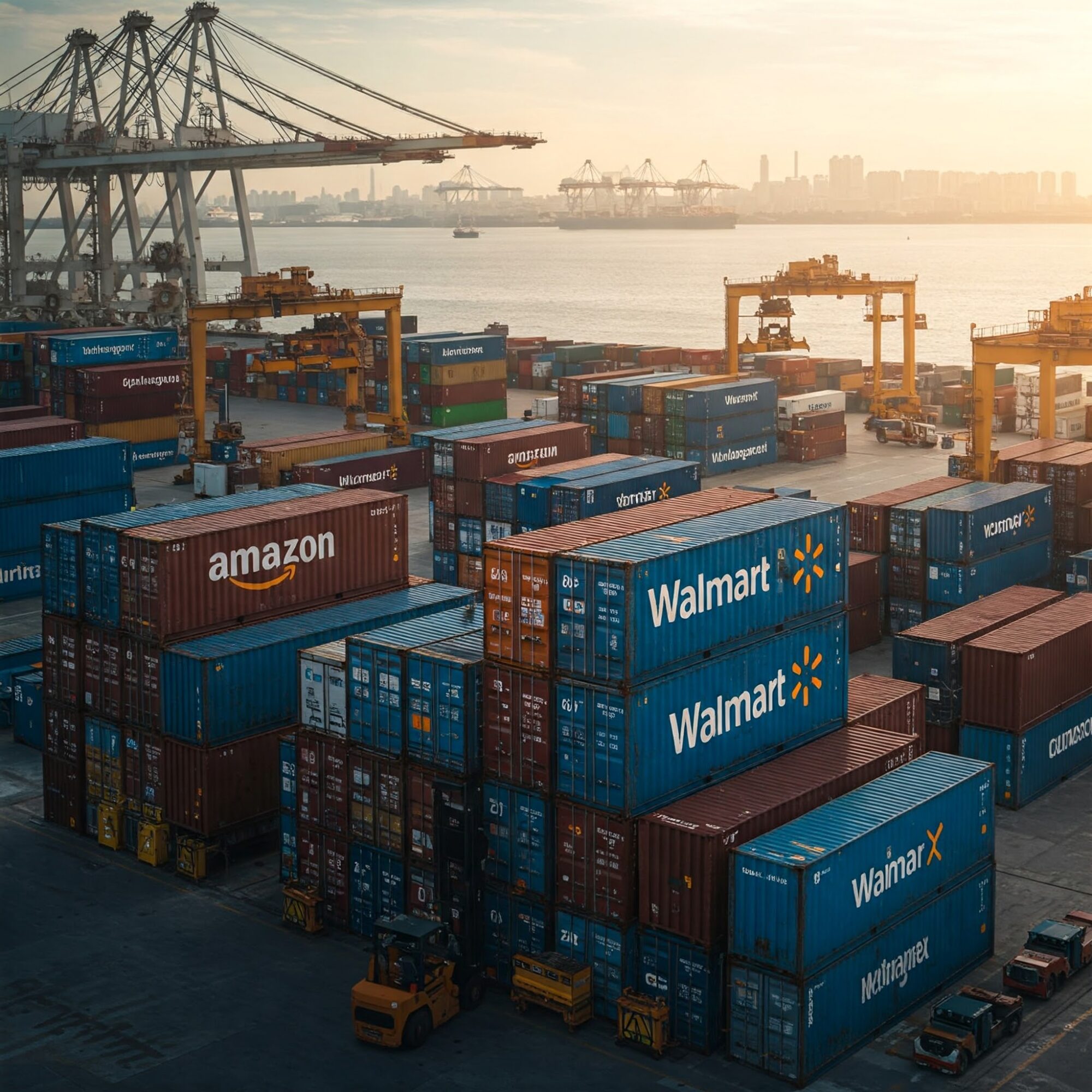
The trucking industry is witnessing a seismic shift, and at the epicenter are two retail giants: Walmart and Amazon. Both have launched their own freight brokerage services, setting the stage for a fierce competition that’s bound to reshape the logistics landscape. For trucking businesses, this face-off presents a mix of opportunities and potential pitfalls. Let’s delve into what this means for you.
The Giants Enter the Arena:
Walmart, with its sprawling network of stores and a growing marketplace, is leveraging its logistical might to connect carriers with freight. Their focus on servicing marketplace sellers could translate into a more consistent flow of loads for trucking companies, a welcome change from the unpredictable spot market.
Amazon Freight, on the other hand, builds upon Amazon’s already formidable logistics infrastructure. Their vast network and technological prowess offer carriers access to a massive pool of freight, promising efficiency and scale.
What This Means for Trucking Businesses:
-
Increased Competition, More Options:
-
The entry of these retail titans intensifies competition in the 3PL sector. This translates to more freight opportunities for carriers, allowing you to diversify your client base and potentially secure better rates.
-
-
The Promise of Stability:
-
Walmart’s emphasis on servicing its marketplace sellers could provide a more stable and predictable flow of freight. This is a significant advantage for carriers seeking to minimize the volatility associated with the spot market.
-
-
Technological Demands:
-
Both Walmart and Amazon are tech-driven. Expect increased demands for real-time tracking, digital communication, and seamless integration with their platforms. Trucking businesses that embrace technology will have a distinct advantage.
-
-
Price Pressures and Profitability:
-
The competition between these giants could lead to price pressures, potentially impacting your profit margins. It’s crucial to carefully evaluate rates and negotiate favorable terms.
-
-
Spot Market Fluctuations:
-
Walmart has the potential to pull large amounts of freight out of the spot market, this could cause the pricing to increase. On the other hand, if Walmart pushes its own excess capacity onto the spot market, it could cause the spot market pricing to decrease.
-
-
The Walmart Advantage:
-
It’s important to note that Walmart has a large advantage in that they have thousands of physical locations. These locations can be used as mini distribution centers, and provide a logistical strength that Amazon does not have.
-
Navigating the Changing Landscape:
To thrive in this evolving environment, trucking businesses should:
-
Embrace Technology: Invest in real-time tracking, digital communication tools, and transportation management systems (TMS) to enhance efficiency and meet the demands of these tech-savvy giants.
-
Diversify Your Client Base: Don’t rely solely on one platform. Explore opportunities with both Walmart and Amazon, as well as other freight brokers, to mitigate risks.
-
Negotiate Favorable Rates: Carefully evaluate rates and negotiate terms that ensure profitability.
-
Prioritize Efficiency: Streamline your operations to minimize costs and maximize efficiency.
-
Stay Informed: Keep abreast of industry trends and changes to adapt to the evolving logistics landscape.
The Bottom Line:
The freight face-off between Walmart and Amazon presents both opportunities and challenges for trucking businesses. By staying informed, embracing technology, and adapting to the changing market dynamics, you can position your business for success in this competitive environment. The key is to be agile, strategic, and ready to navigate the evolving logistics landscape.